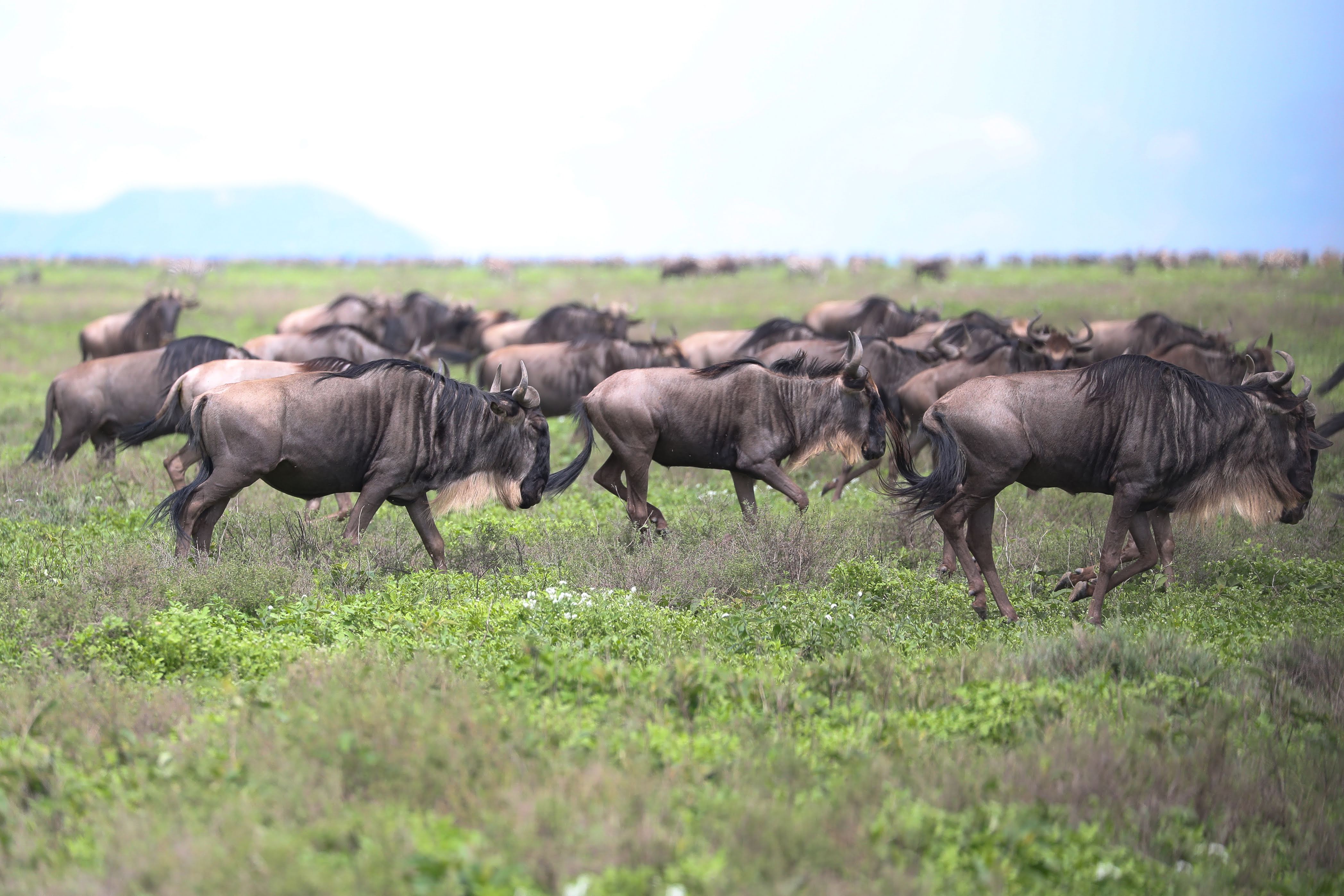
The Great Migration is not a single event that happens in one place. Wildebeest and zebra move through the wider Serengeti-Mara ecosystem in response to rainfall and grazing. A migration safari therefore needs seasonal positioning, flexible expectations and enough nights in the area most likely to be productive for your dates.
The migration is movement, not a show
Wildebeest and zebra respond to rainfall and grazing, so their location changes. Exact timing differs from year to year.
From a planning perspective, this point should influence the route before accommodation is chosen. Good safari design starts with geography and wildlife priorities, then matches the right lodge to that plan.
Southern Serengeti / Ndutu This area is associated with the broader calving period and can be exceptional for large herds and predator activity.
This is also where a private itinerary adds value: the schedule can be adjusted around the traveller rather than forcing every guest into the same pace or stopping pattern.
Western and northern movement As conditions change, the herds move through western and northern areas. Northern Serengeti becomes important during the broader Mara River season, but crossings are unscheduled natural events.
For the website, explain this trade-off clearly. Travellers are more likely to trust a company that explains why a route works than one that simply lists destinations and promises everything.
How many nights
Migration-focused travellers should generally allow at least three to four Serengeti nights, ideally with more than one camp zone when the route warrants it.
Accommodation should support this part of the journey by reducing unnecessary driving and giving guests enough time to enjoy both the destination and the property they have paid for.
The right promise
Sell strong positioning and experienced guiding, not guaranteed crossings. Honest expectations protect both the traveller and the brand.
The final decision should always be checked against the guest’s dates, budget and priorities. A strong itinerary is specific to the traveller, not simply copied from a standard template.
Final Planning Advice For Tamri International, the objective is not to rank for the keyword 'Great Migration safari Tanzania' by repeating it unnaturally. The page should answer the traveller’s real planning questions, link to relevant safari packages and end with a clear invitation to request a tailor-made itinerary. Useful content builds trust first and converts second.
CTA: Plan Your Tanzania Safari with Tamri International - tamriinternational.com